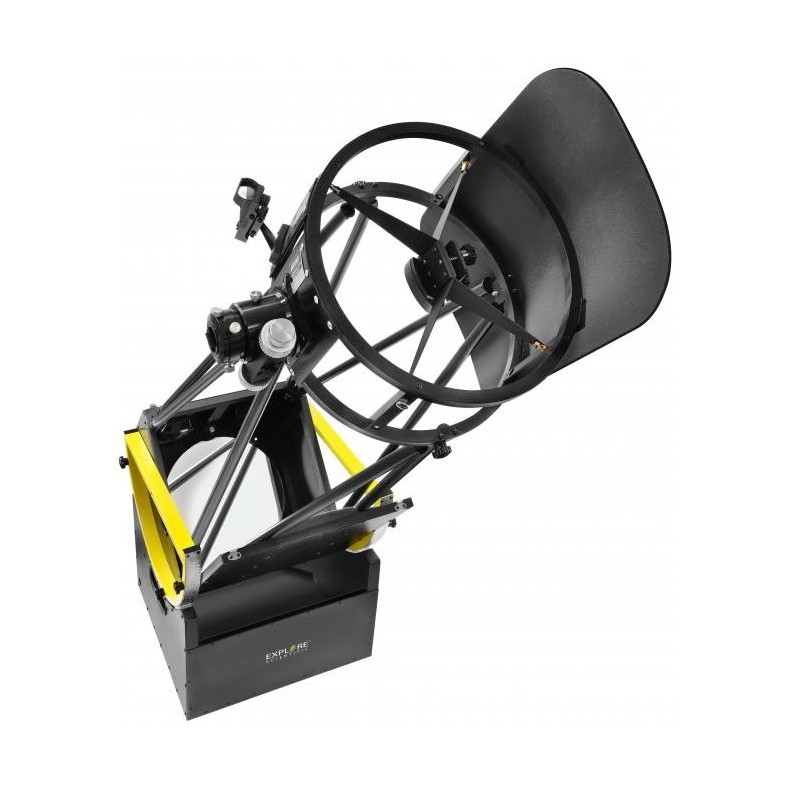
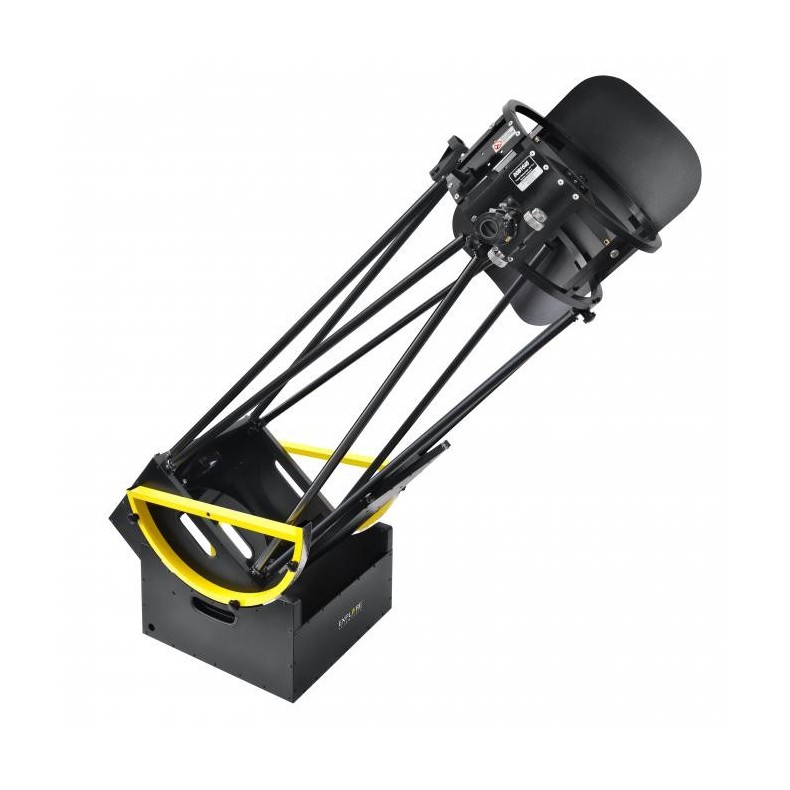
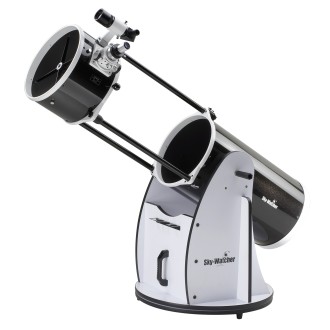
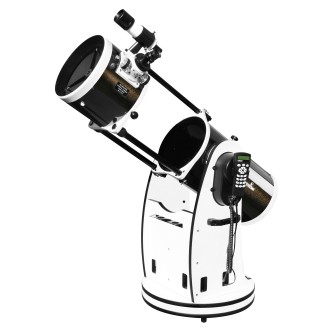
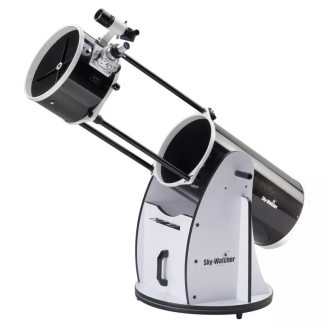
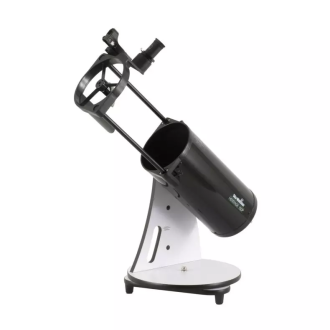
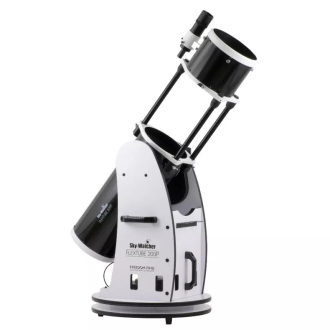
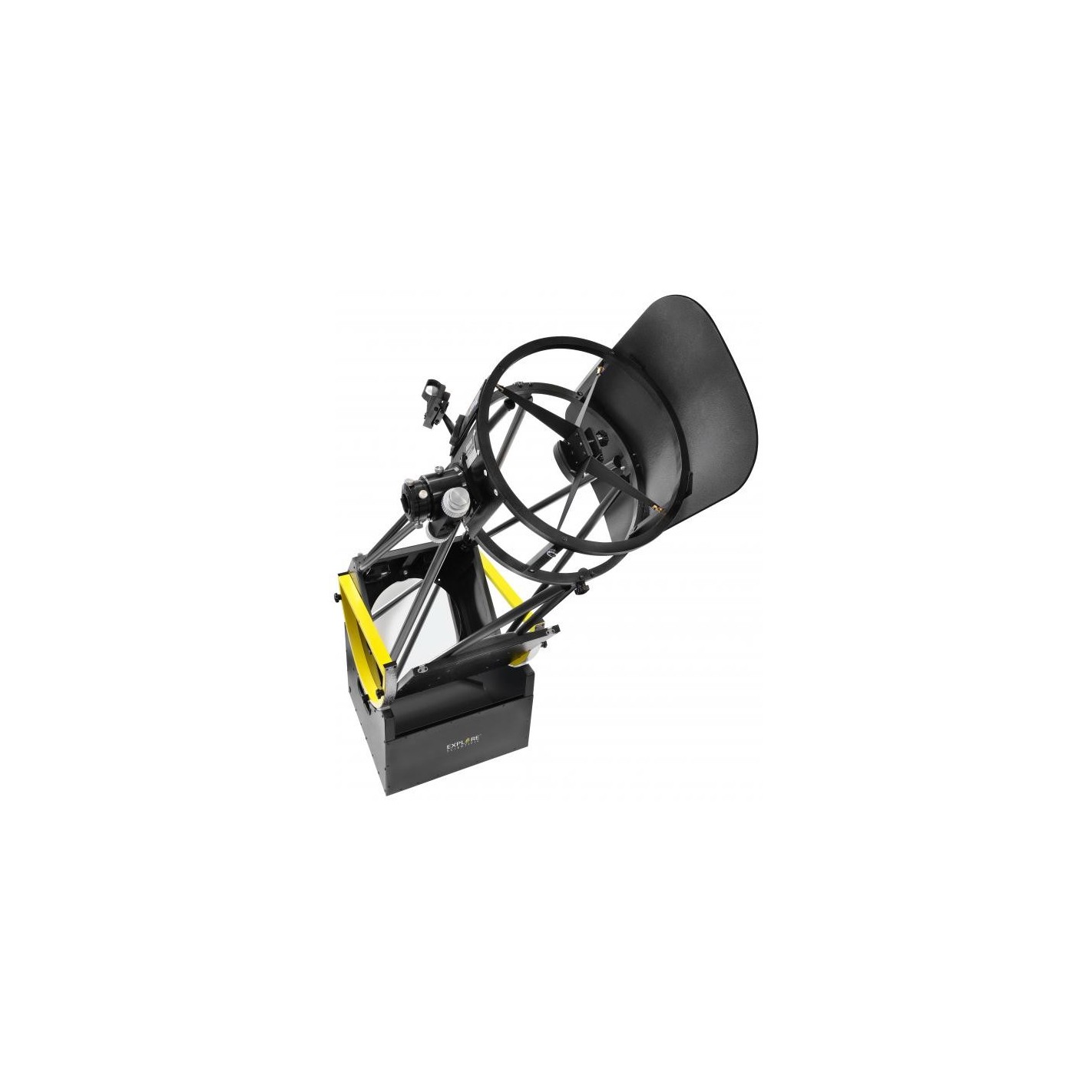
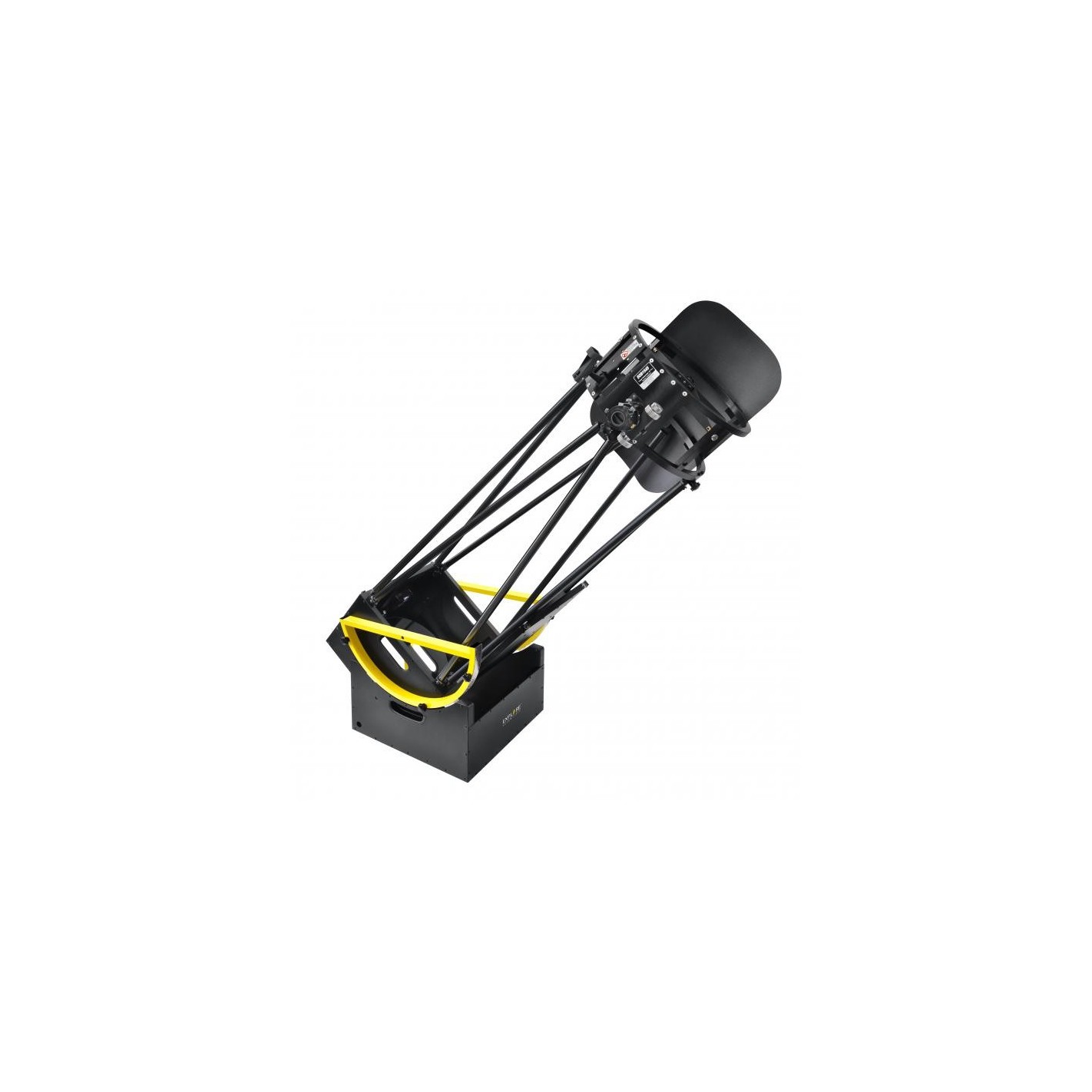
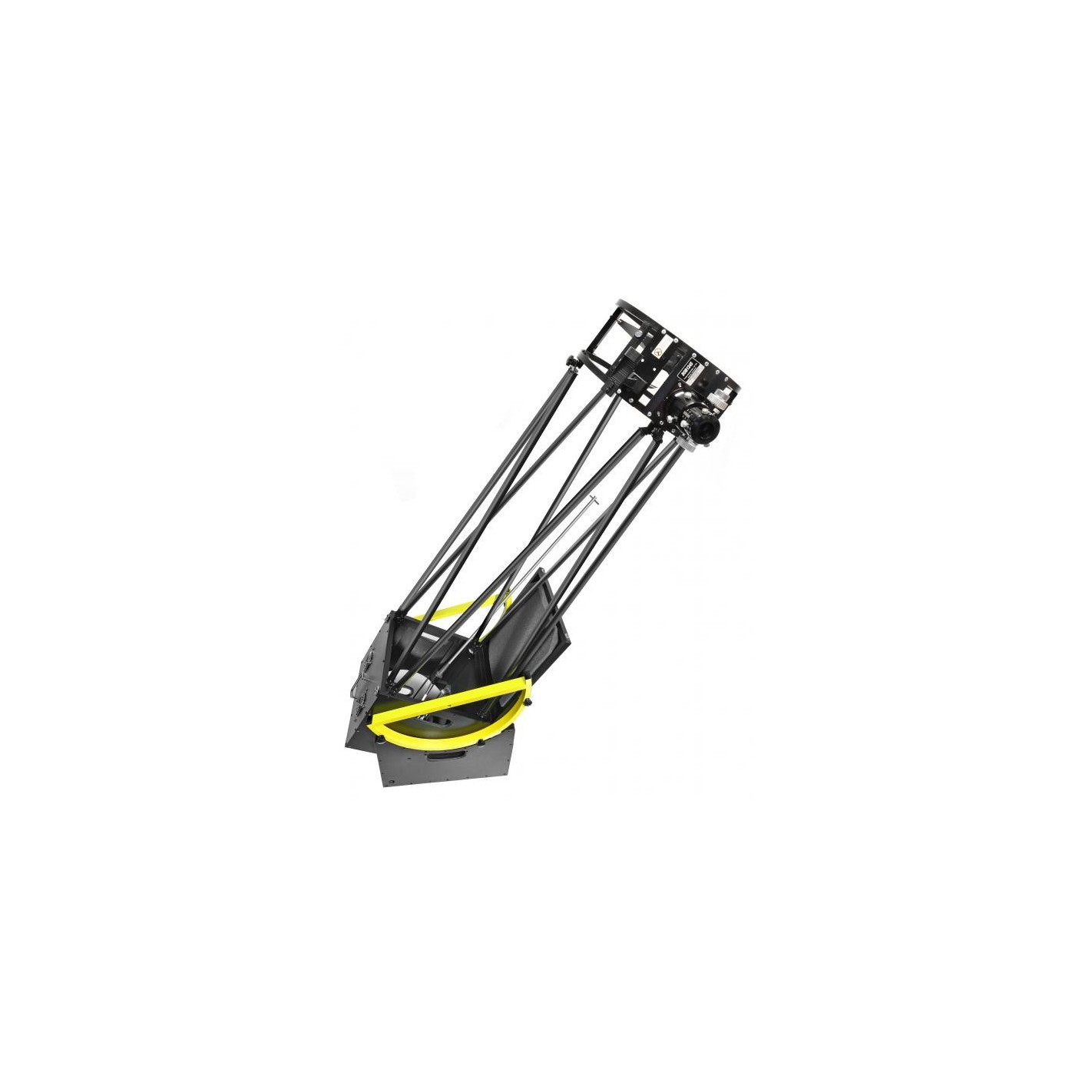
Dobson Telescope Explore Scientific Ultra Light 16".
Dobson Truss Explore Scientific Ultra Light 406 mm (16") Generation II Telescope
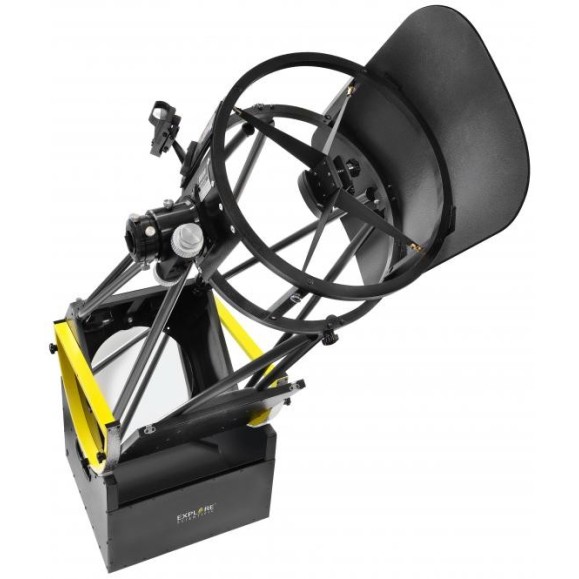
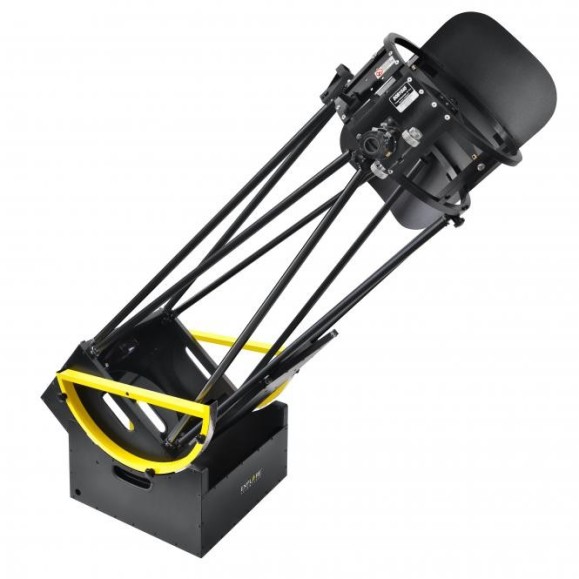
The Dobson Truss Ultra Light Generation II 406 mm (16") represents the highest level of large aperture spotting scopes. Designed for advanced users and experienced observers, this instrument combines outstanding light gathering capability with a lightweight aluminum construction optimized for transport, quick mounting and maximum mechanical rigidity.
The Dobson concept has been one of the most influential advances in the history of amateur astronomy. Its philosophy is based on offering the largest possible aperture with the simplest and most efficient mechanics, allowing observers to access levels of deep sky detail previously reserved for professional observatories or extremely expensive equipment.
Extreme aperture for deep visual observation
With a 406 mm primary mirror, this telescope is capable of collecting more than 3,300 times the light of the human eye. This capability makes it a true visual astronomical exploration tool, capable of revealing extremely faint structures and complex details in deep sky objects.
Galaxies show distinct spiral arms, star-forming regions and clearly discernible internal brightness variations. Nebulae show filaments, complex structures and faint extensions that are only visible with apertures of this level. Globular clusters appear fully resolved down to their cores, offering an impressive three-dimensional view.
In planetary observation, the high resolution of the system allows the detection of fine details on Jupiter, Saturn and Mars under suitable atmospheric stability conditions. The Moon becomes an extremely detailed field of study, with reliefs, shadows and geological structures clearly visible.
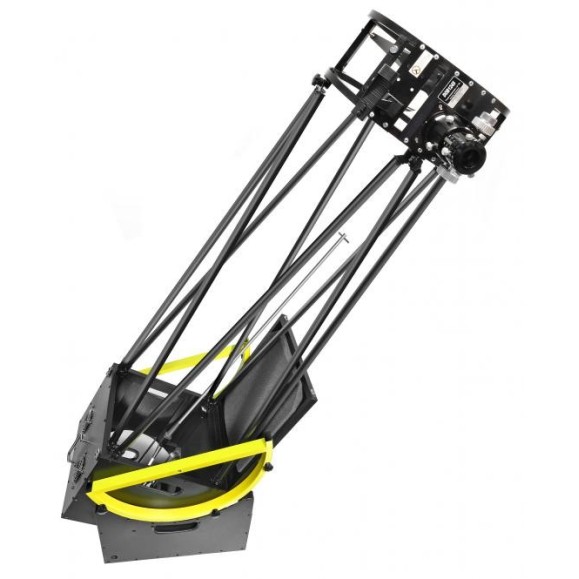
Aluminum Truss design: maximum rigidity with optimized weight
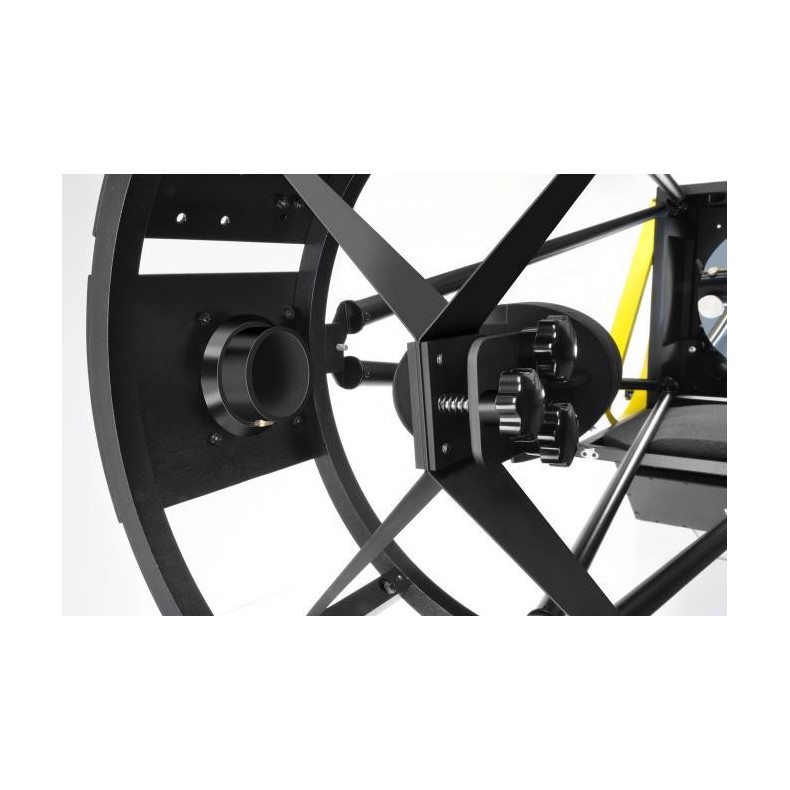
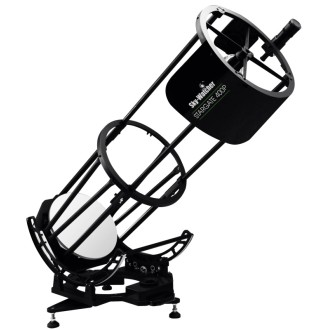
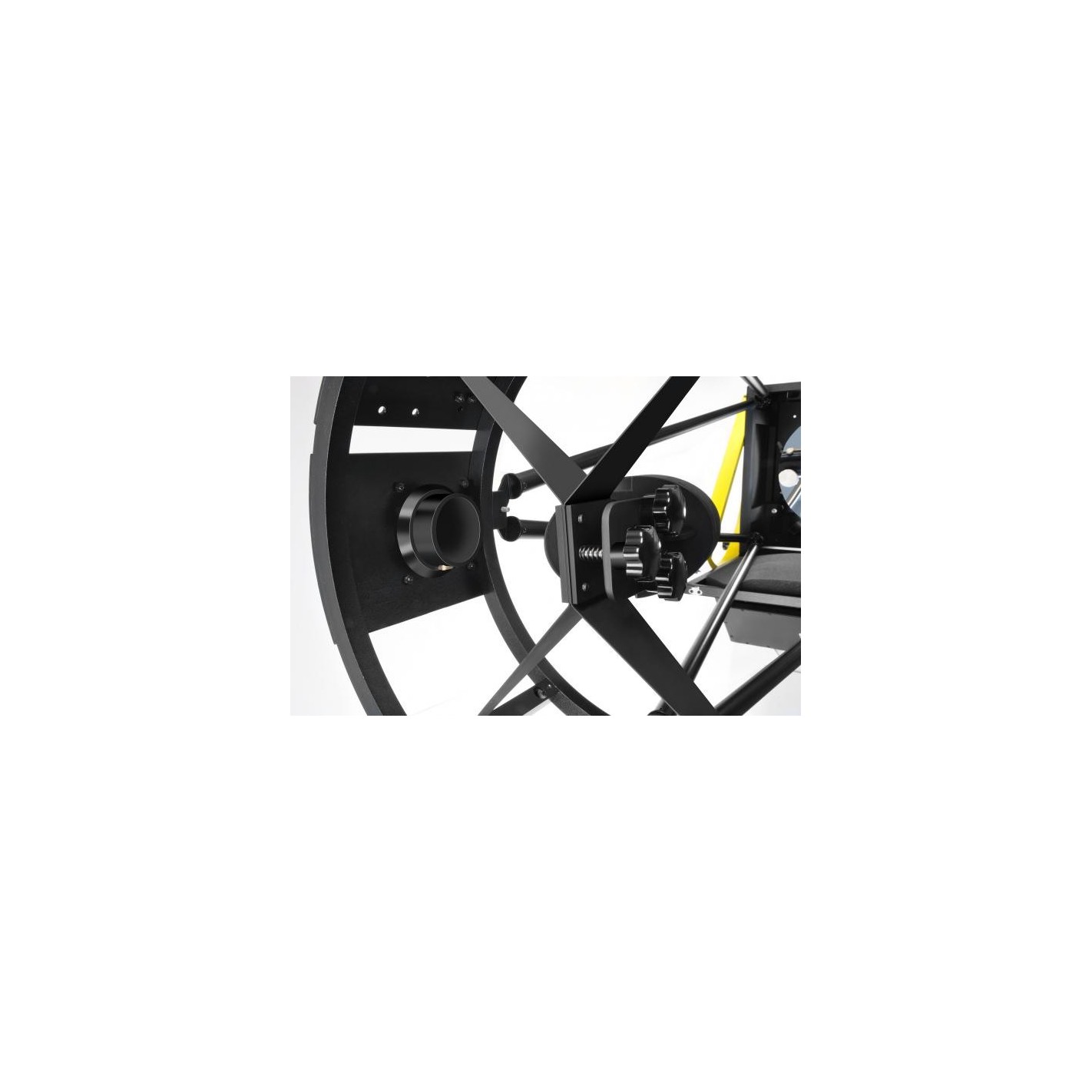
This model is constructed entirely of aluminum, eliminating organic materials or composites susceptible to deformation due to humidity or thermal changes. The result is an extremely rigid and durable structure, designed to withstand large optical loads without compromising stability.
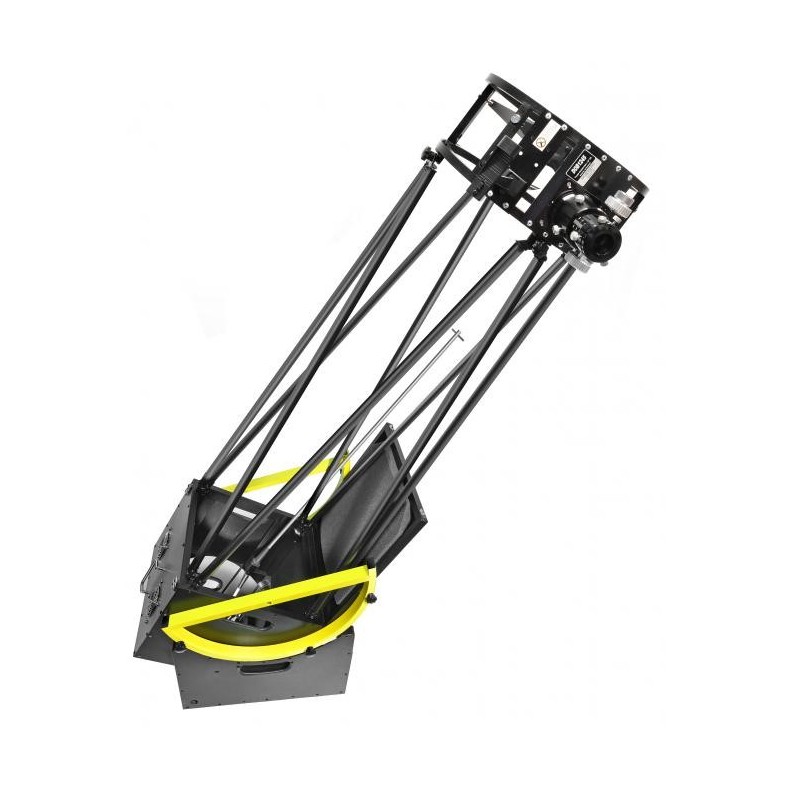
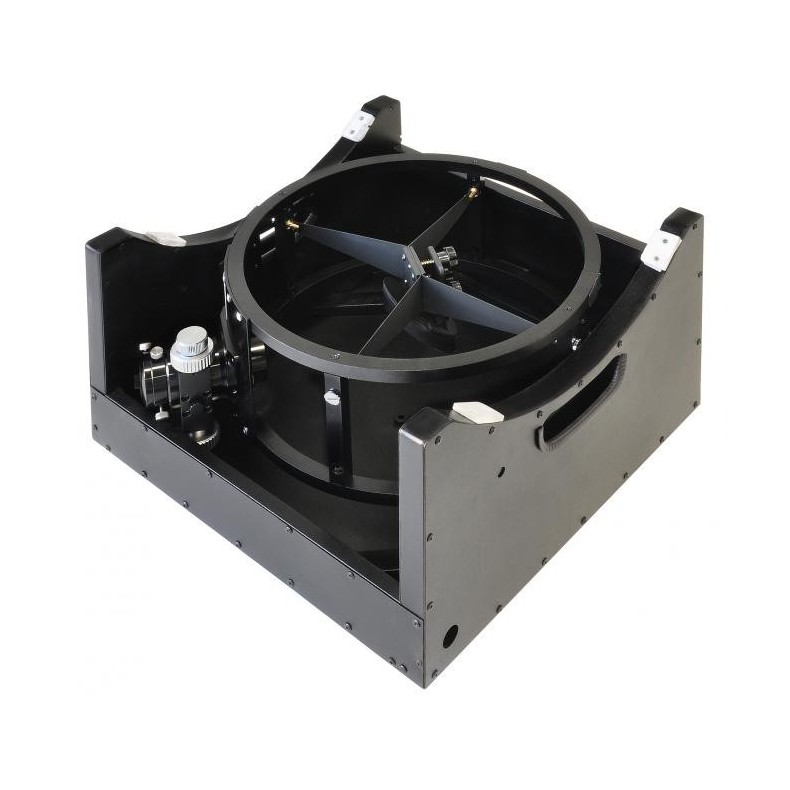
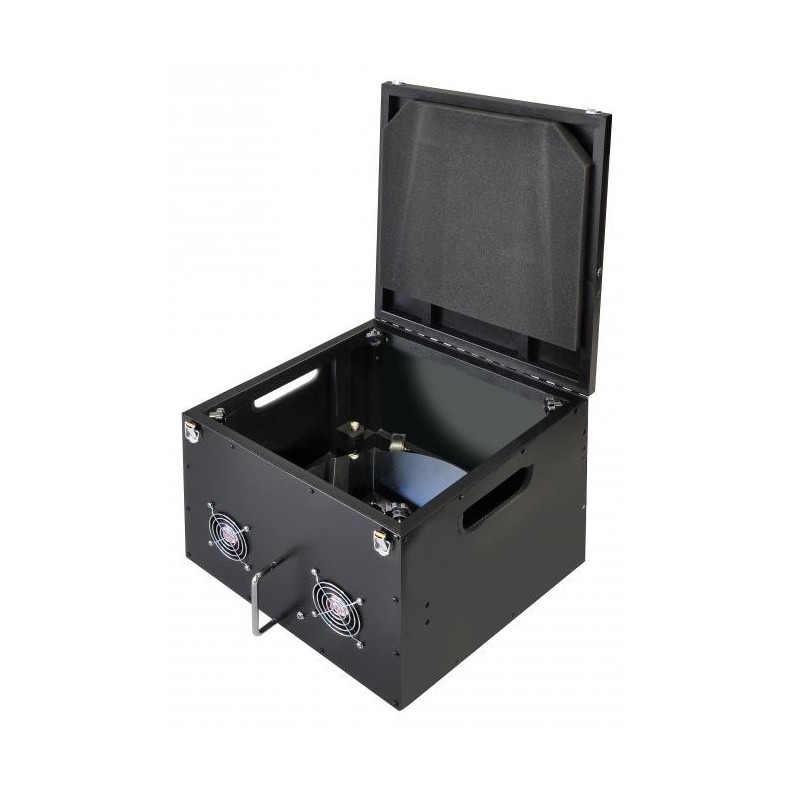
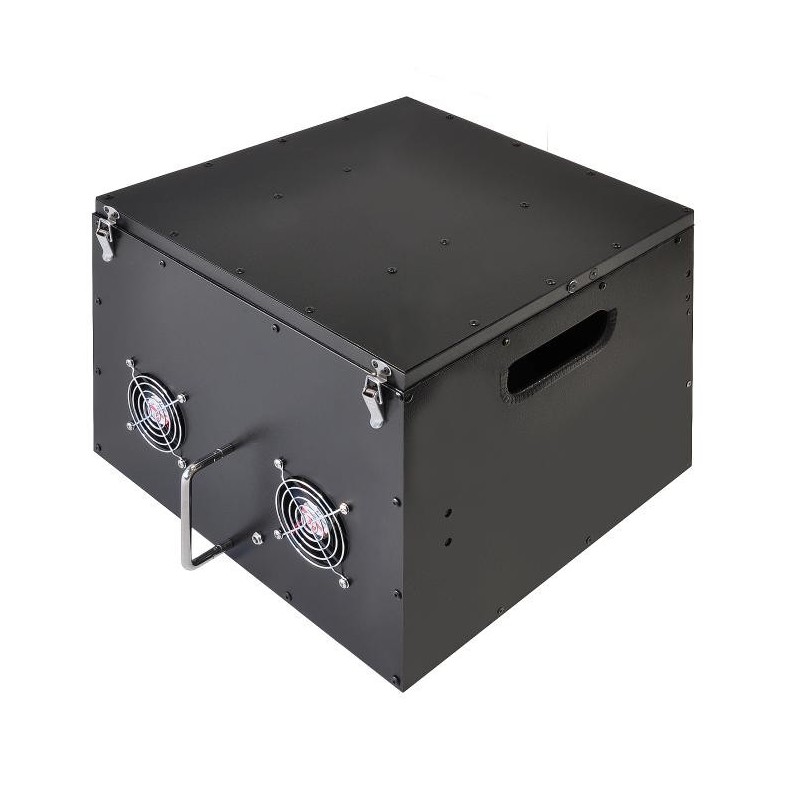
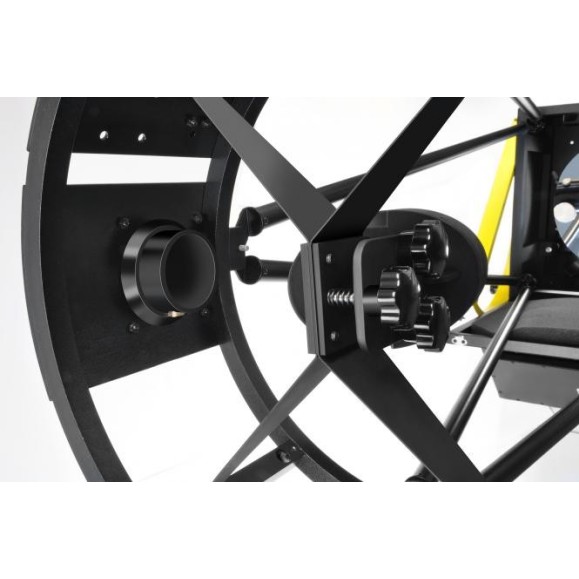
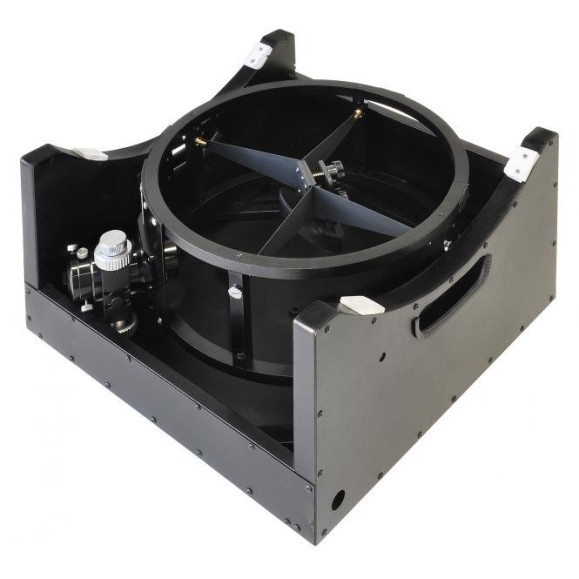
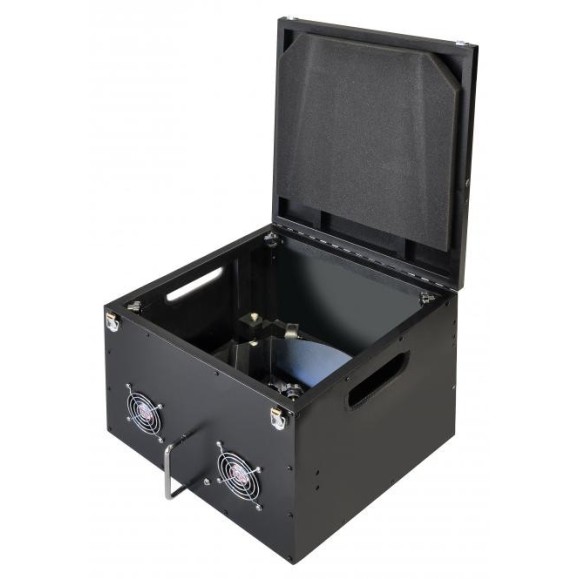
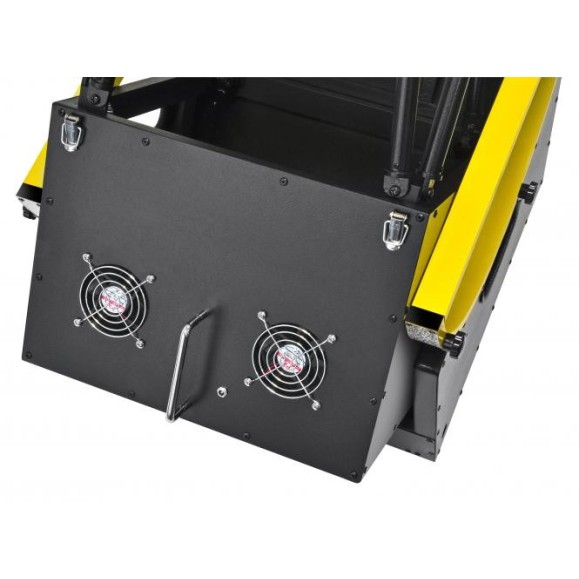
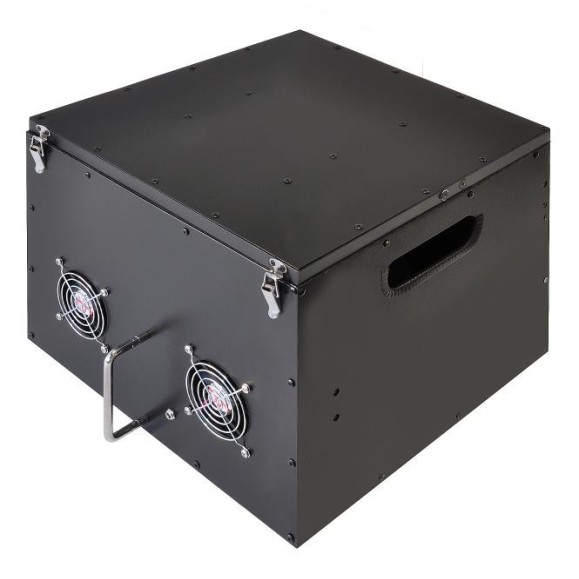
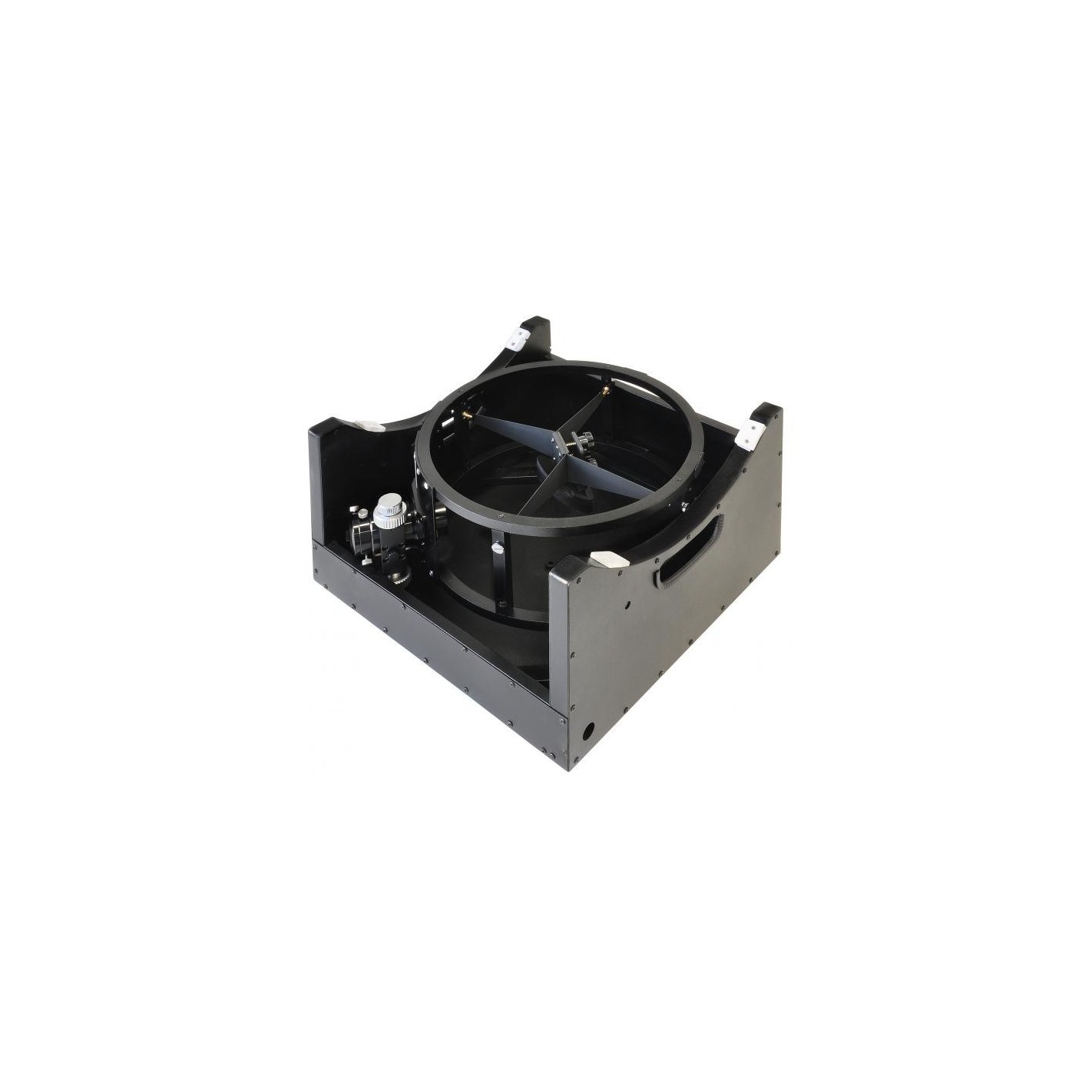
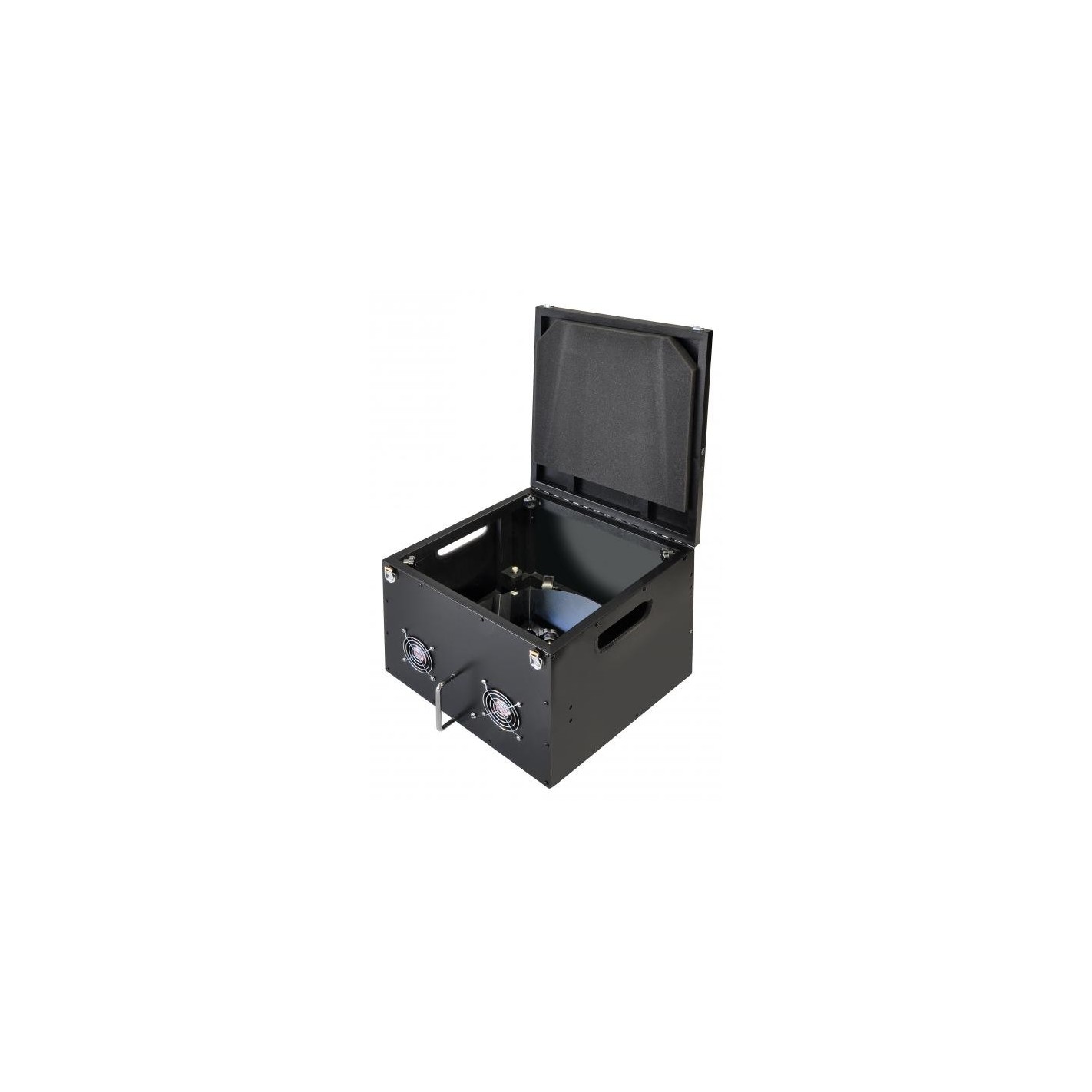
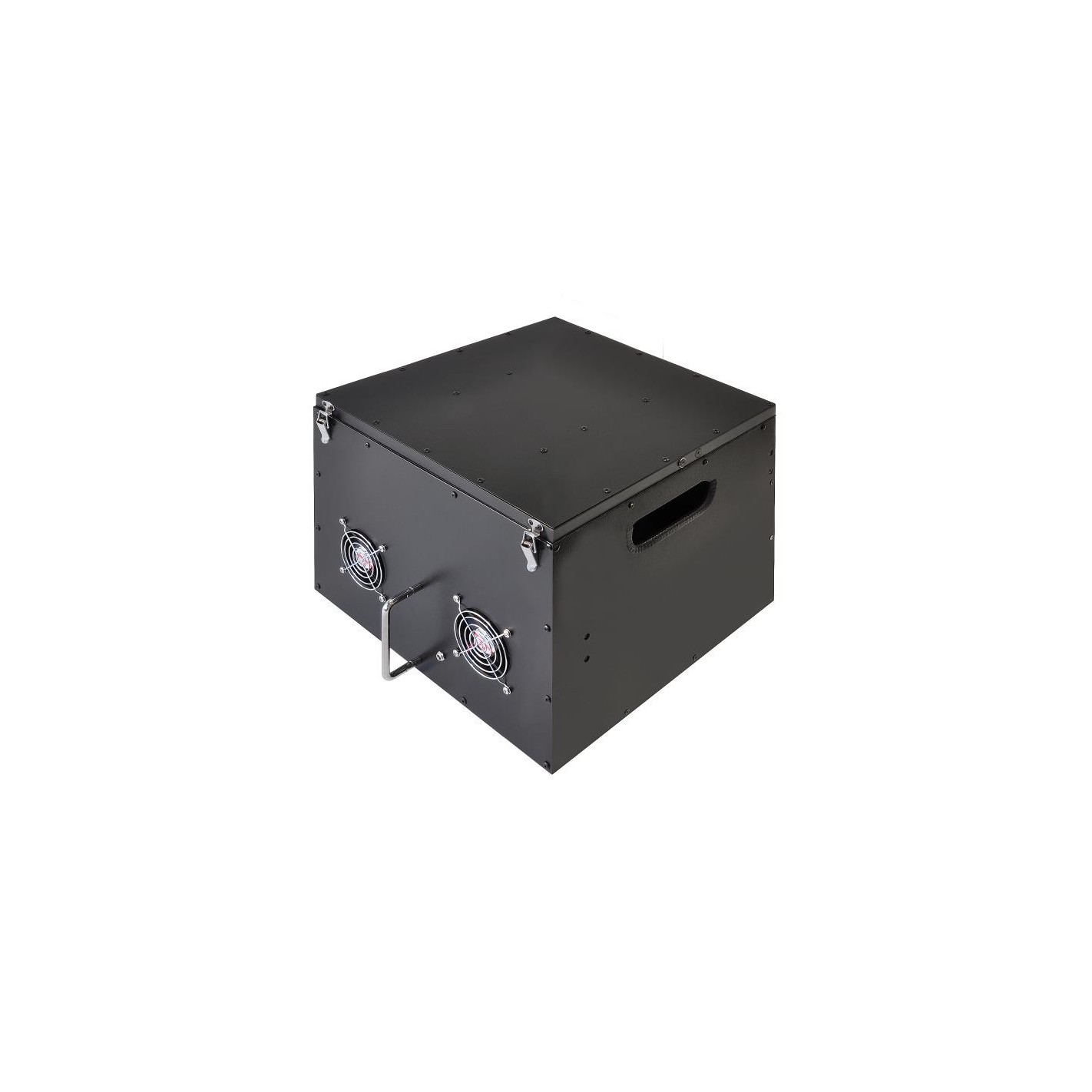
The detachable truss design allows the telescope to be reduced to transportable modules that can be stored in two large aluminum boxes and the structural rod assembly. Despite its size, the system is optimized for ease of transport within the constraints of large aperture equipment.
The large altitude wheels and aluminum sandwich structure allow smooth and controlled movements even at very high magnifications, where any excessive vibration or friction directly affects the quality of the observation.
Generation II: structural and mechanical improvements
This version incorporates a series of improvements aimed at increasing stability, precision and ease of use:
- New Teflon and GFK sliding bearings for smoother and more controlled movement.
- Completely redesigned primary mirror cell for improved support and collimation.
- Height-optimized brake and friction system for precise movement control.
- Larger support feet for improved overall stability of the assembly.
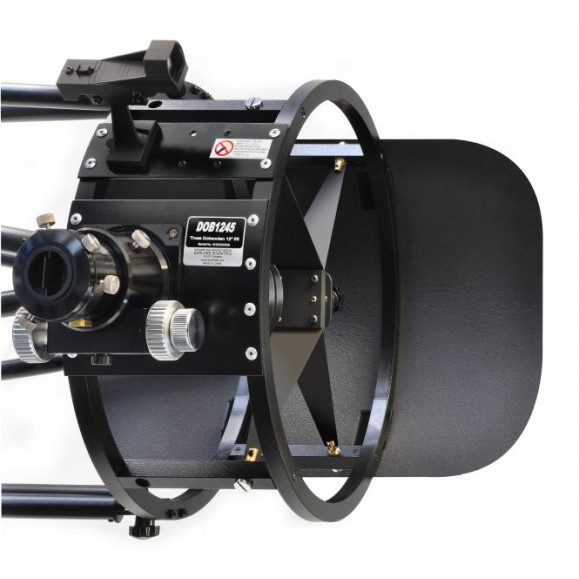
- Universal finder support system with expandability.
- Counterweight system included (2 x 1 kg) for fine balancing.
- Quick-release fasteners with spring-loaded design for more efficient assembly.
- Powder coated altitude wheels for durability.
- Laser engraved center mark on primary mirror to facilitate precise collimation.
Precise collimation and alignment maintenance
The optical system is designed to facilitate fast and accurate collimation of both the primary and secondary mirrors without the need for complex tools. The structural stability of the assembly helps maintain alignment during transport, reducing preparation time before each session.
Advanced thermal management
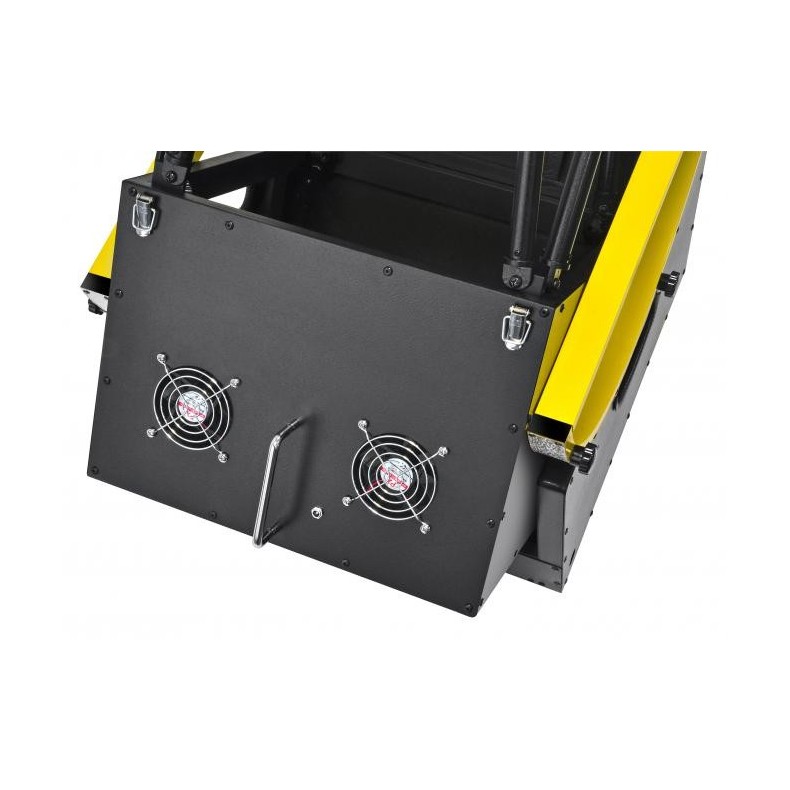
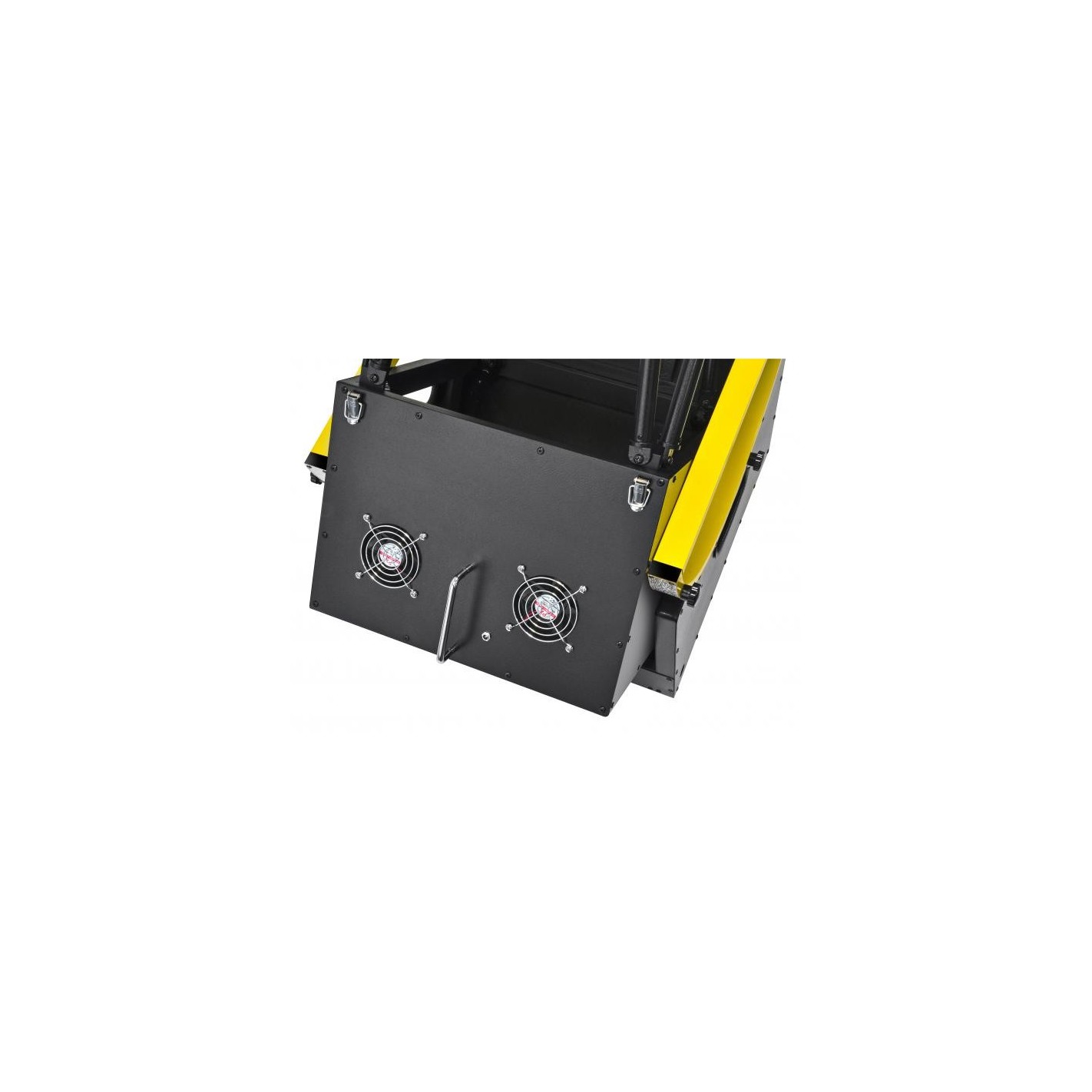
Given the size of the primary mirror, thermal stabilization is critical for high quality images. The telescope incorporates two high-powered radial fans that accelerate thermal equilibrium, reducing internal turbulence and improving image sharpness in high-resolution observing.
Optical system ready for advanced observing
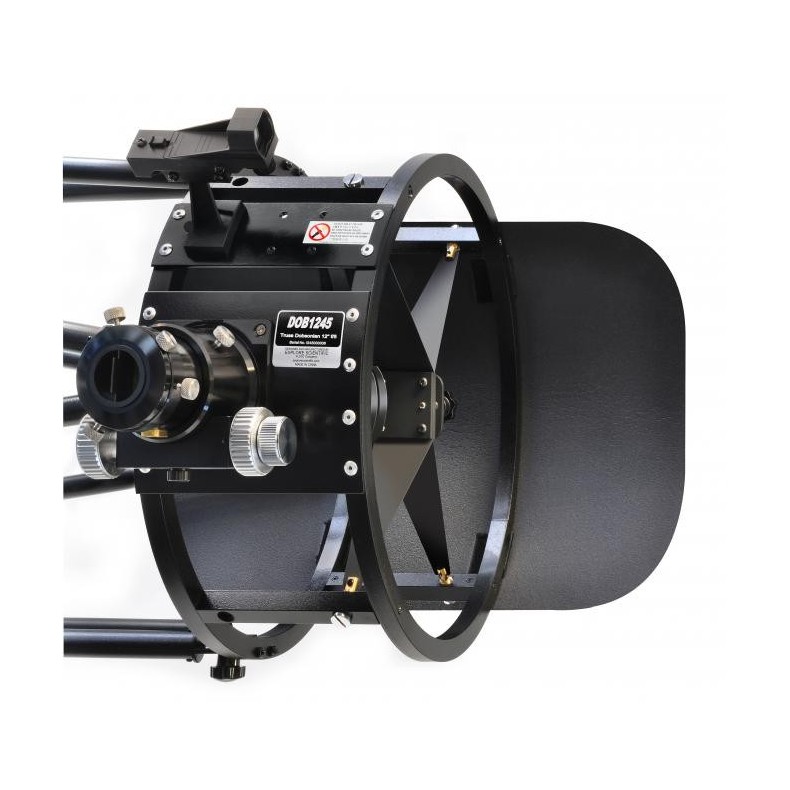
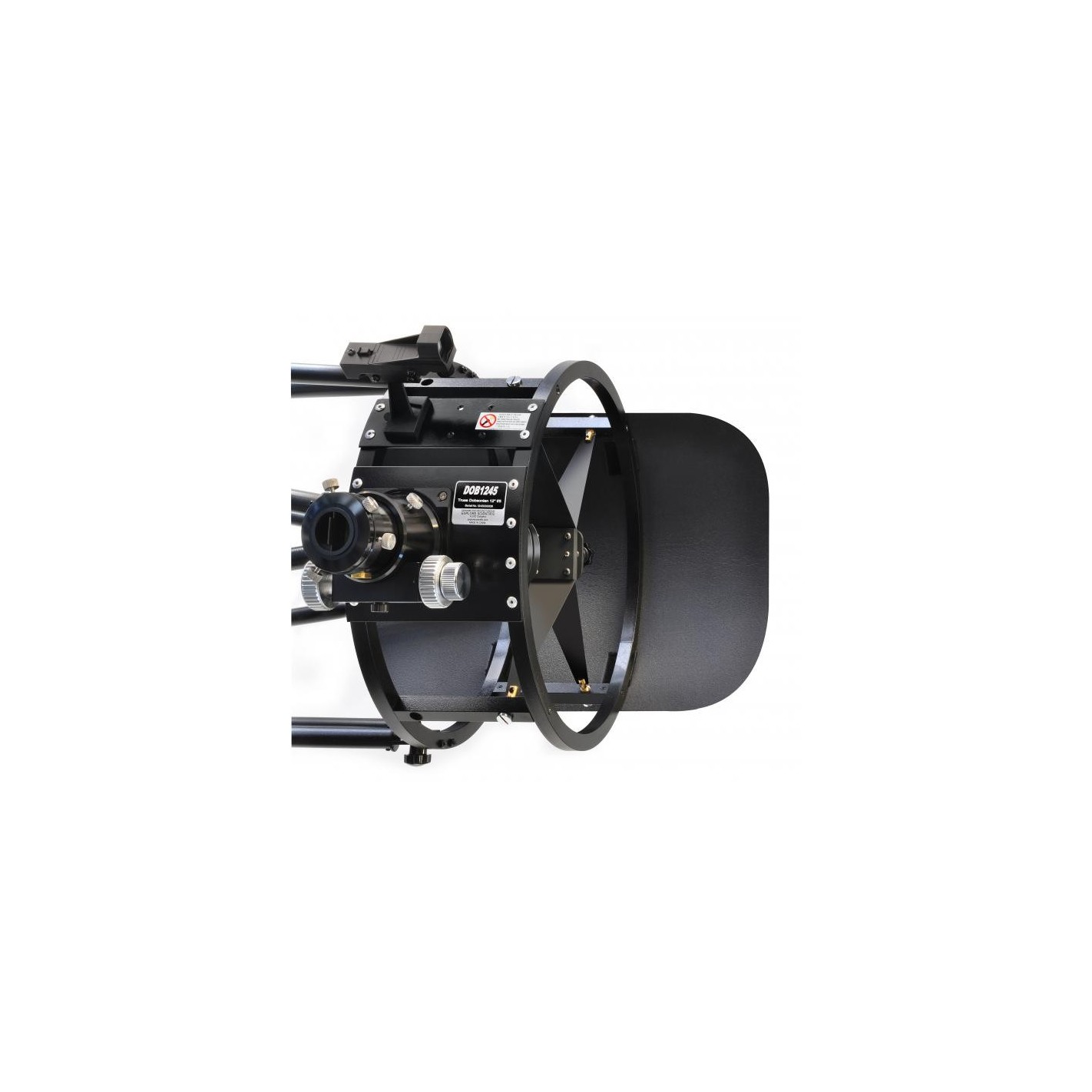
The 2" focuser with 10:1 micrometer reduction allows extremely precise focus adjustment, essential for high-magnification observation. The focal plane configuration is optimized for the use of coma correctors, allowing flatter and more usable fields in deep sky observation.
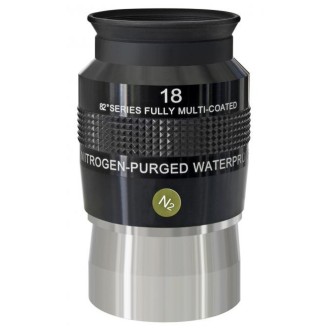
The system is compatible with 2" and 1.25" eyepieces, offering total flexibility in accessory selection.
An expert-level instrument
The 406 mm Dobson falls into the category of advanced observing instruments, where user experience, sky quality and observing technique play a decisive role. Its huge aperture allows access to extremely faint objects, making it an ideal tool for expert observers, assisted visual astrophotography and deep sky exploration projects.
Technical features
- Optical design: Newtonian reflector.
- Aperture: 406 mm (16").
- Focal length: 1,826 mm.
- Focal ratio: f/4.5.
- Angular resolution: 0.32 seconds of arc.
- Maximum recommended magnification: 800x.
- Central obstruction: 22%.
- Primary Mirror Material: BK-7.
- Mount Type: Dobson.
- Frame Material: Metal/Aluminum.
- Focuser: 2" Rack-and-Pinion with 10:1 reduction.
- Focuser thread: M54 x 0.75 mm.
- Power supply: 12V (batteries or mains adapter).
- Approximate total weight: 38.4 kg.
- Extended warranty: 5 years.
Dimensions and transport
- Rocker Box: 550 x 550 x 330 mm.
- Mirror Box: 480 x 480 x 300 mm.
- Truss Bars: approx. 1,250 mm.
- Eyepiece height at zenith: approx. 1.63 m.
- Total length: approx. 1,826 mm optical focal length.
- Transport: modular system in aluminum cases.
Weight per component
- Total weight: 38.4 kg.
- Primary mirror (box): 23.8 kg.
- Secondary cell + rocker box: 10.5 kg.
- Truss bars: 2.5 kg.
- Altitude wheels: 1.6 kg.
Includes
- Dobson Truss Ultra Light 406 mm Generation II telescope.
- Red Dot type LED finder.
- Anti-light screen for secondary cage.
- Main mirror collimation tool.
- Battery compartment with fan bag.
- Counterweight system (2 x 1 kg).
- Extension tube for focuser.
- Adapter 2" to 1.25".
- Instruction manual.
Dobson telescope Explore Scientific Ultra Light 16".