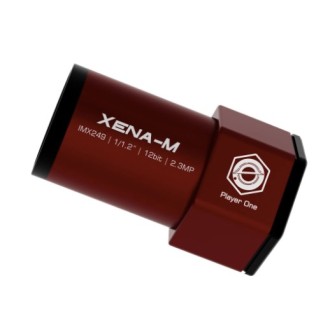
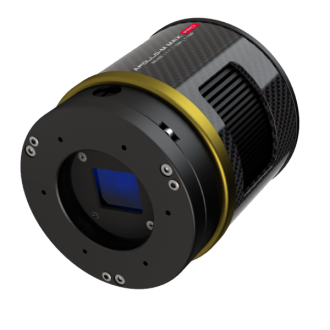
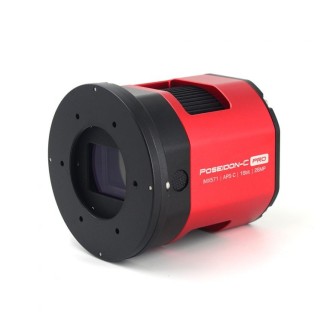
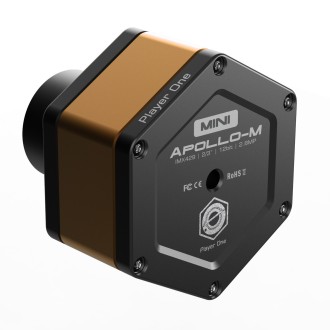
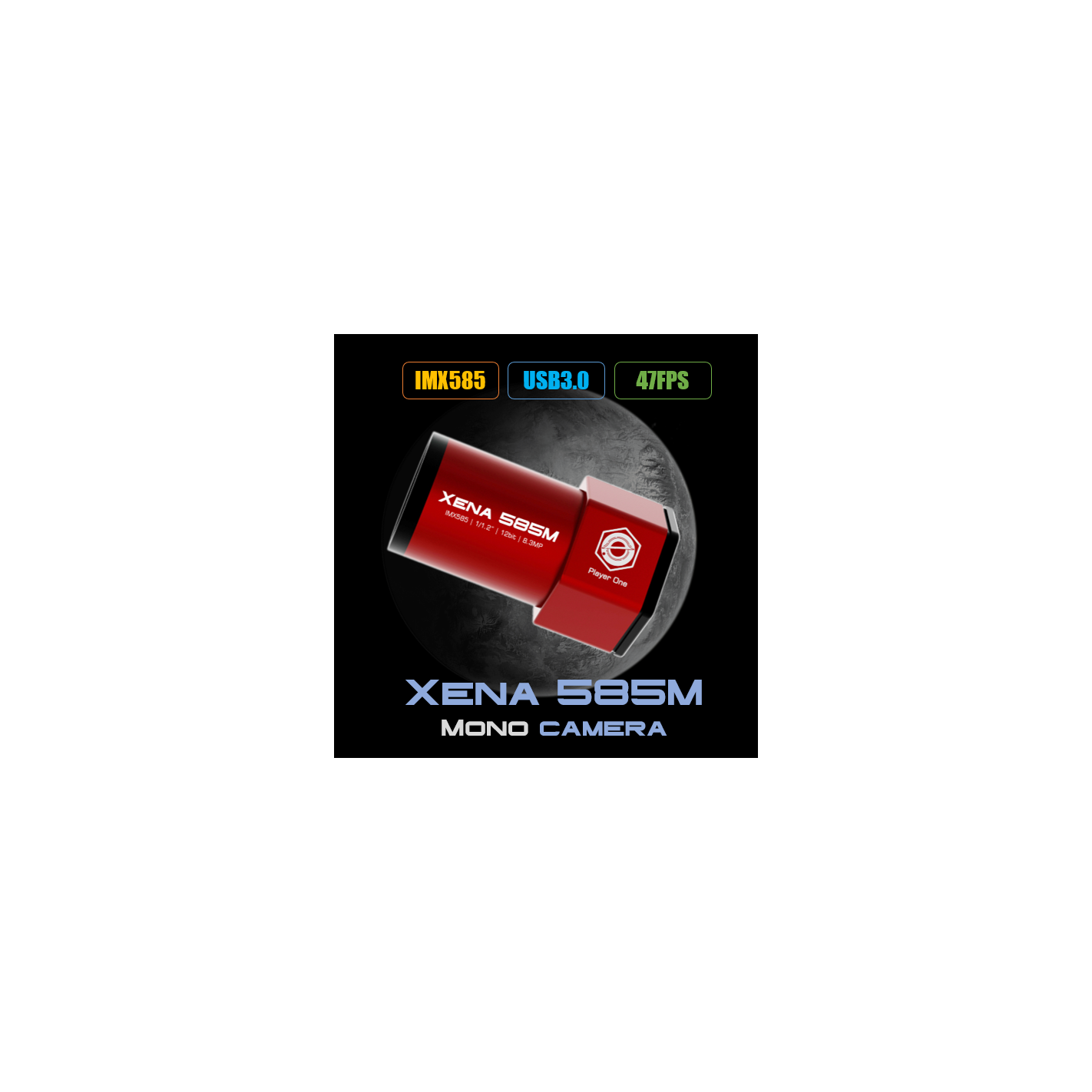
The series of guiding cameras Player One Astronomy, also known as Dwarf Planet Series, has been specifically designed for autoguiding and astrophotography, combining modern sensors, high sensitivity and a compact format optimized for advanced astronomical setups.
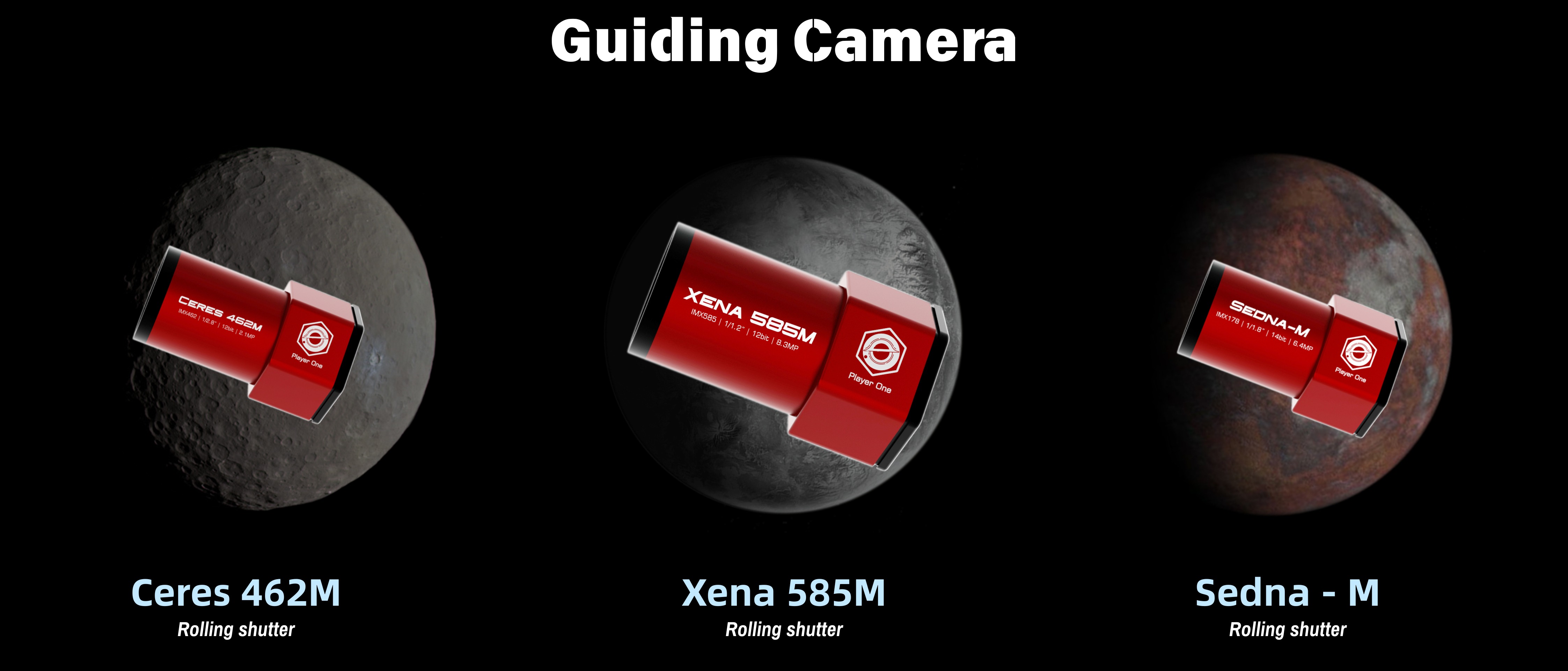
This range is composed of three models -Ceres, , Sedna y Xena- that cover different needs depending on the type of telescope, focal length and user's level of demand, from lightweight guidance systems to more advanced astronomical capture configurations.
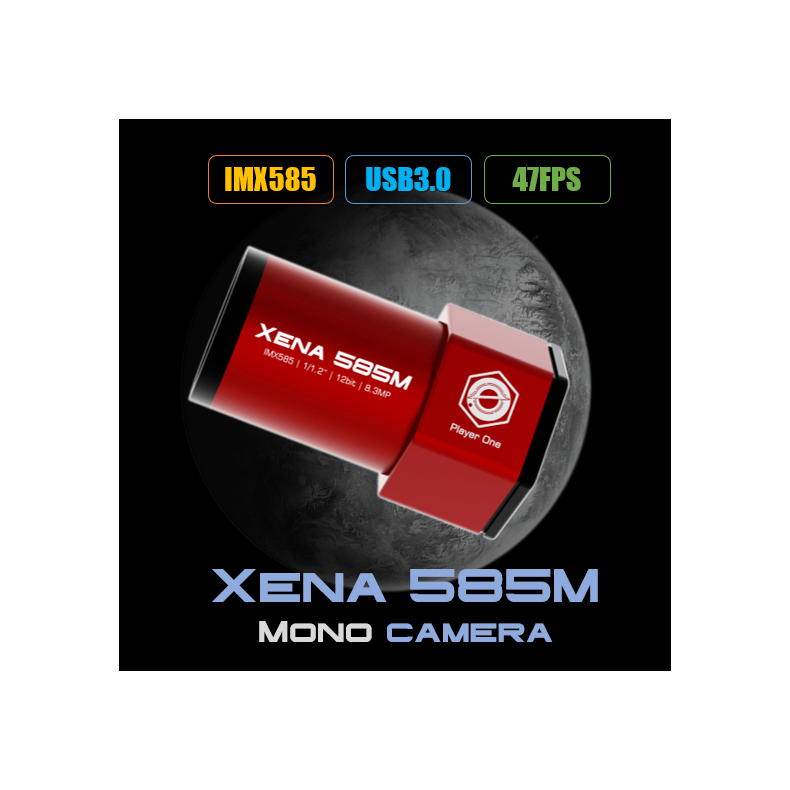
The Player One Astronomy Xena 585M is a monochrome guidance camera developed by Player One Astronomy, based on the sensor Sony IMX585, a modern CMOS sensor of 1/1.2" format especially suitable for applications of high precision autoguiding and auxiliary astronomical capture.
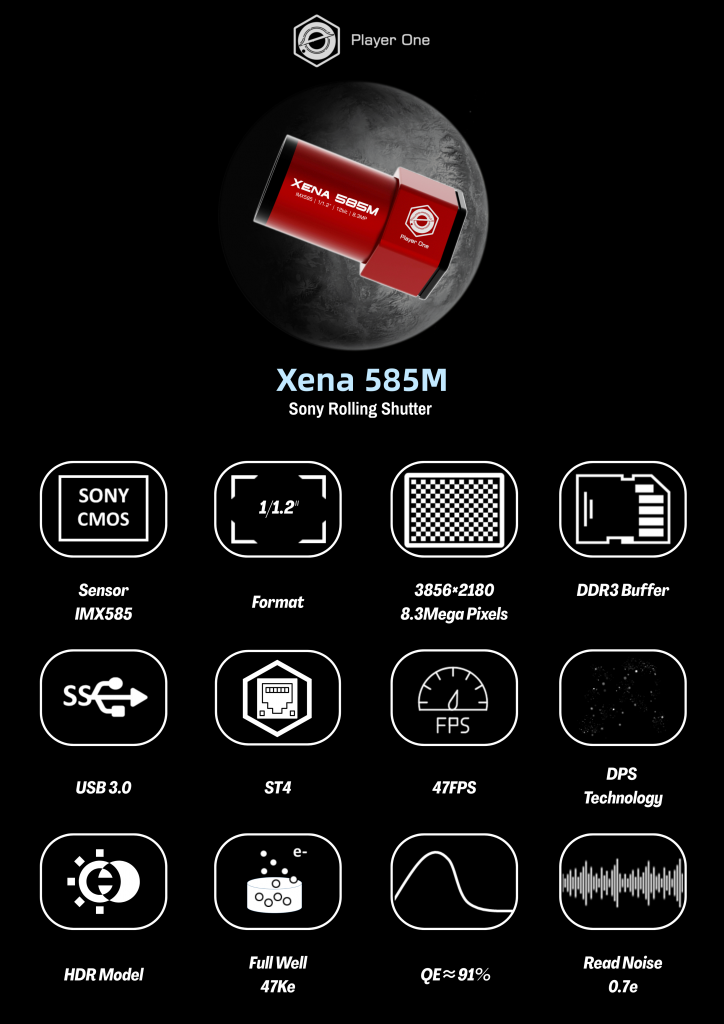
The sensor has 2.9 micron pixels, that make it possible to achieve a full well capacity of 47,000 electrons (47 ke-), the new system offers an excellent balance between sensitivity, dynamic range and noise tolerance in short exposures, which are essential in demanding guidance systems.
The Xena 585M has a total resolution of 8.3 megapixels, with a matrix of 3856 × 2180 pixels, and a 12.85 mm active diagonal, which provides a wide field of vision to facilitate the selection of guide stars even in long focal length configurations or sparsely populated skies.
STARVIS 2 Technology - Sony IMX585 Sensor
The Xena 585M incorporates the sony STARVIS 2 technology, the most recent evolution of the back-illuminated CMOS sensors (BSI, Back-Illuminated Sensor), designed for improve sensitivity in low light conditions, reduce noise and optimize signal pickup in demanding applications such as astronomical self-guiding.
The architecture backlit allows for greater efficiency in photon collection compared to traditional front-illuminated sensors, which translates into more reliable detection of faint stars and more consistent performance in short exposures, critical in guidance systems.
Connectivity and performance
The cameras of the Dwarf Planet Series integrate a uSB 3.0 data port (5 Gbps), offering a transfer speed of up to far superior to USB 2.0 (480 Mbps). This increased bandwidth capacity ensures:
In practice, this translates into a more stable experience when working with image acquisition and guidance software.
Mechanical design and compatibility
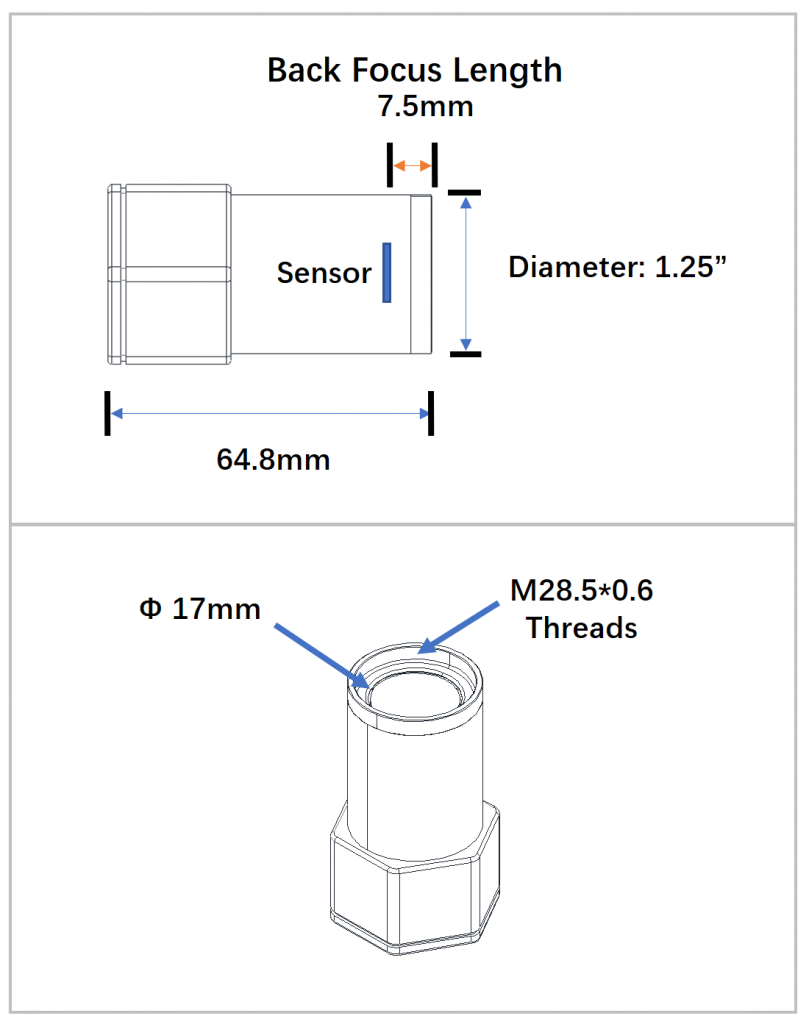
The camera body features a 1.25" standard diameter, which allows its direct insertion into 1.25" adapters of guide telescopes without the need for additional accessories.
This compact design reduces the overall length of the optical train, minimizes mechanical flexing and facilitates integration into lightweight or portable configurations, this is especially relevant in guidance setups with limited space.
Use as a guide camera or electronic search engine
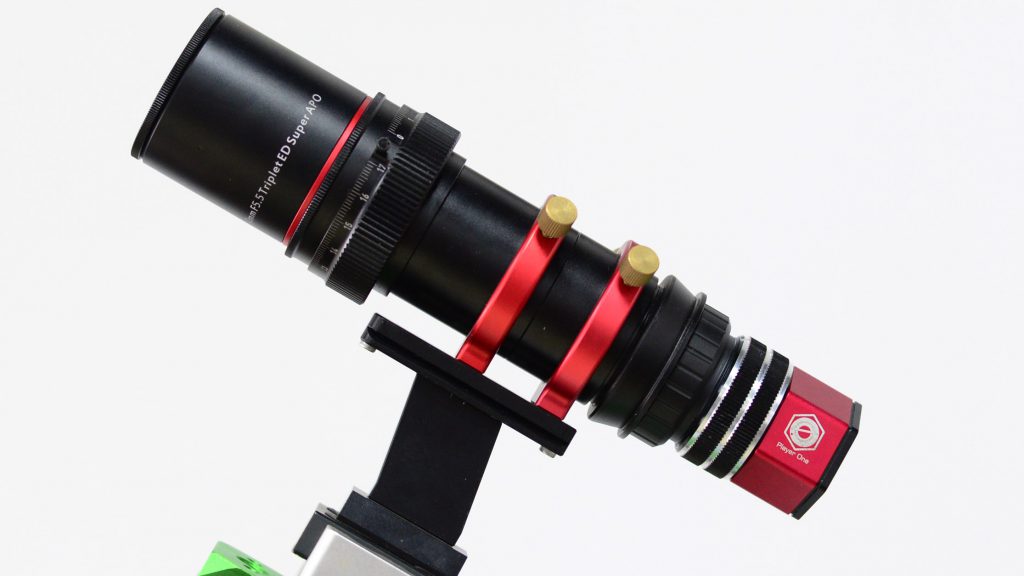
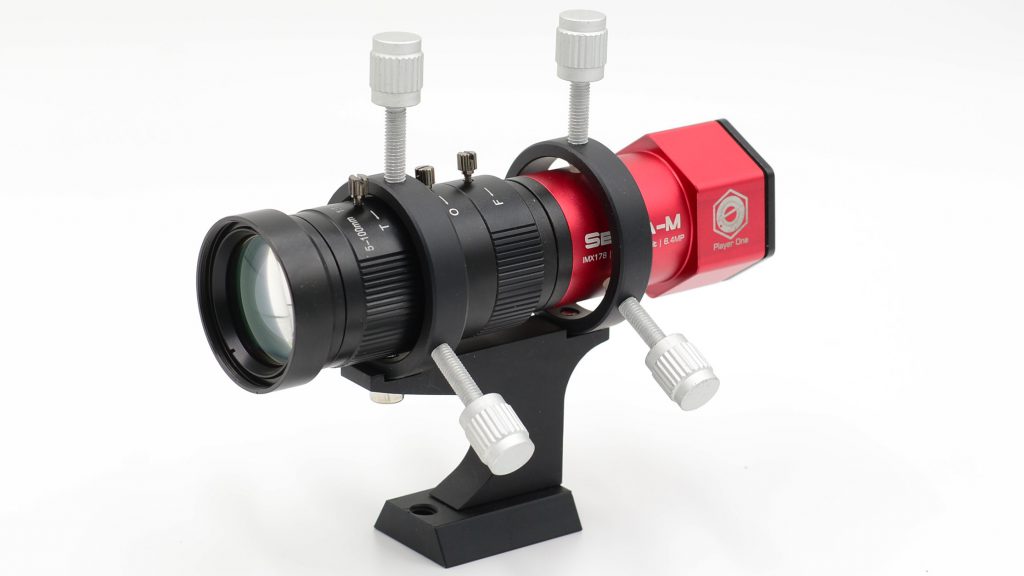
Thanks to its compatibility with CS lenses, the Player One Astronomy Xena 585M can also be used as stand-alone camera guide or as an electronic search engine when equipped with a cS lens with a focal length between 5 and 100 mm.
This configuration allows:
-
Using the camera as a autonomous guide, without dedicated guide telescope
-
Use it as a electronic finder for centering and alignment
-
Simplify setup in portable equipment or travel configurations
The use of CS lenses extends the versatility of the Xena 585M, especially in systems where weight, space or speed of assembly are critical factors.
Dwarf Planet Series - Concept and designation
Player One Astronomy has adopted an approach of consistent nomenclature for their guidance chambers, grouping them under the dwarf Planet series. This denomination is based on a simple and technical idea: the guidance chambers are usually more compact than planetary or deep sky cameras, both in physical size and sensor format.
Each model in the series is named after a different dwarf planet, and the relative size of the astronomical object represents, as a guideline, the sensor format used in the chamber:
-
Ceres corresponds to cameras with sensor 1/3"
-
Xena identifies models with sensor 1/1,2", the number of
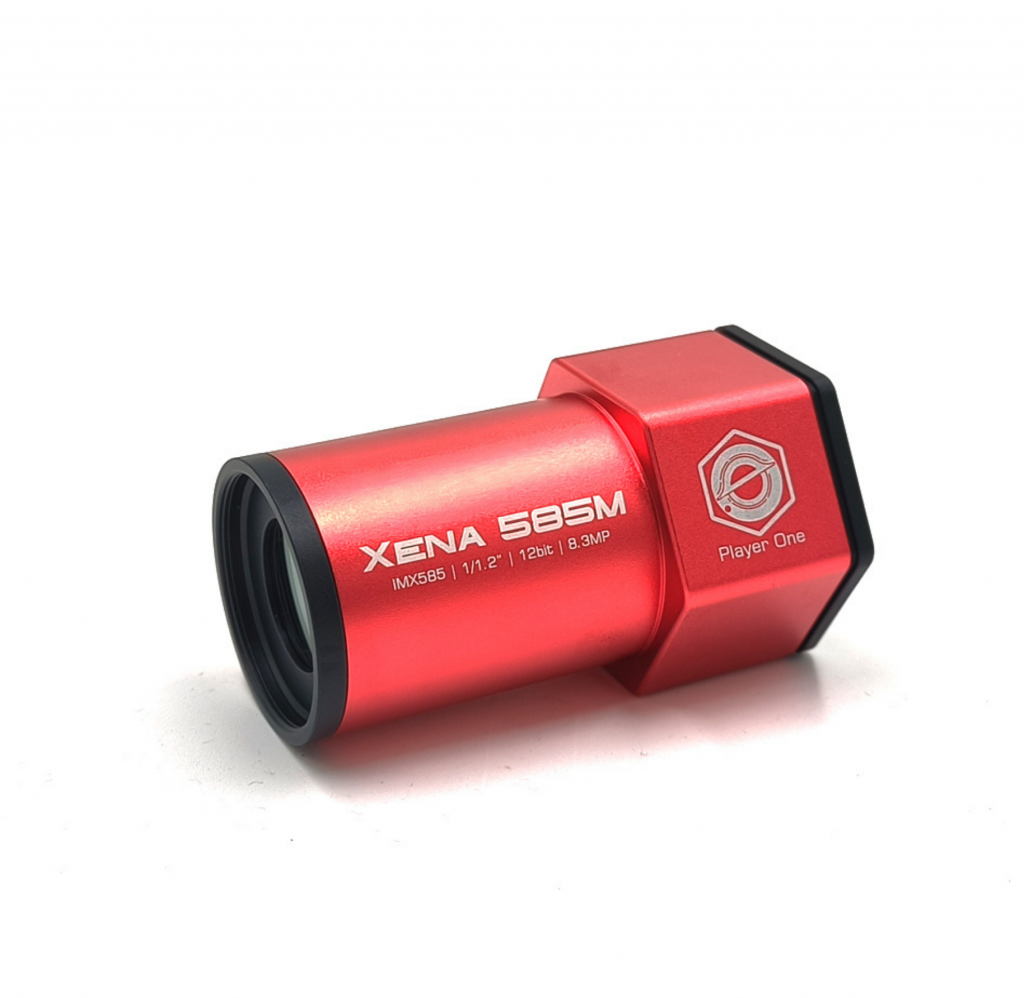
As a detail of design and authenticity, the the model name is engraved directly on the camera body, reinforcing the visual identification and belonging to the series.
Design and construction
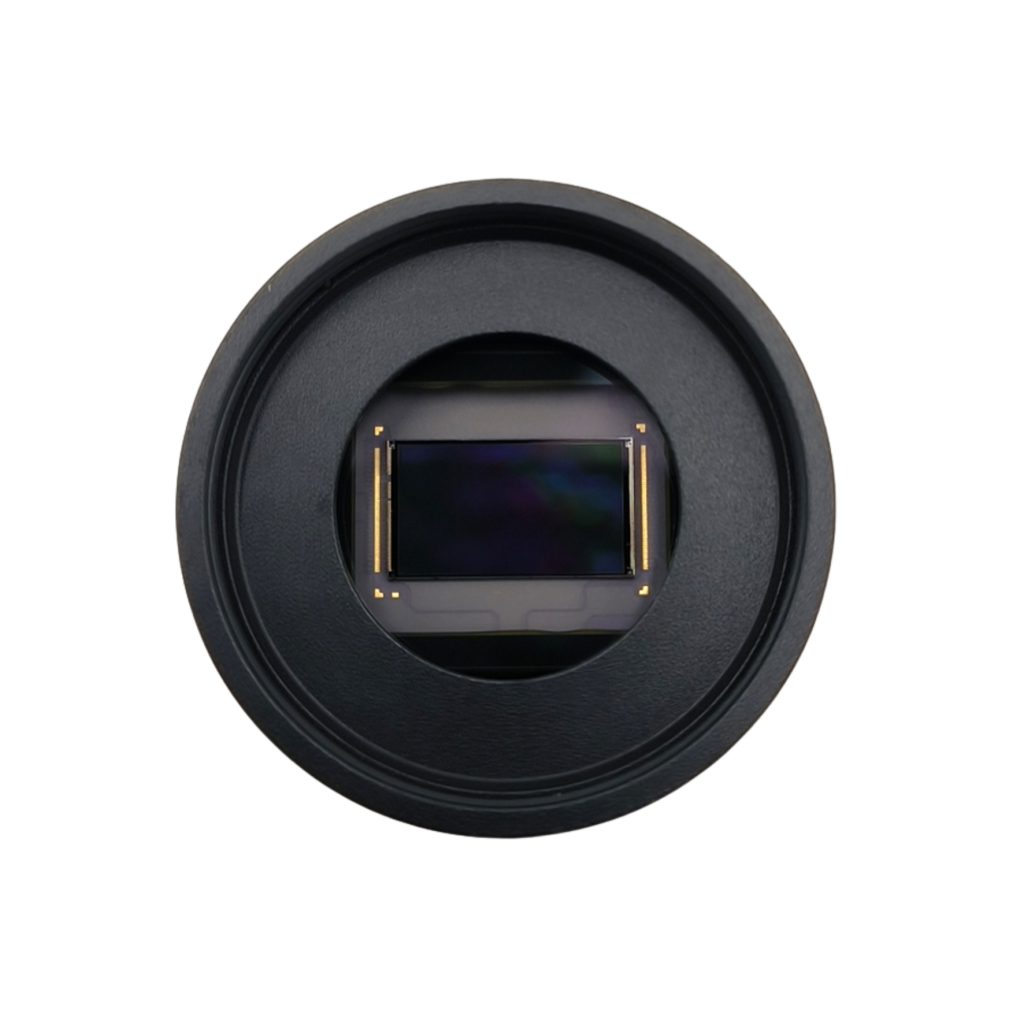
The guidance chambers of the Player One Astronomy present a geometric design based on hexagonal lines, the main structure of the body is defined and provides a technical and recognizable aesthetics within the dwarf Planet series.
This design not only responds to visual criteria, but it also allows for a compact and well-proportioned body, this facilitates the integration of the camera in guiding setups where space is limited.
HDR (High Dynamic Range) mode
The Xena 585M, based on the sensor Sony IMX585, incorporates hDR mode through firmware, an advanced functionality that allows extending the effective dynamic range y reduce reading noise under certain capture conditions.
This mode is especially useful in deep sky astrophotography (DSO), the use of a single image, where very bright areas and faint regions coexist within the same scene, helps to preserve information without premature saturation or loss of signal in shadows.
Important technical note: HDR mode is dependent on the firmware and the manufacturer's SDK, the camera must therefore be kept up to date and compatible software must be used.
DPS Technology (Dead Pixel Suppression)
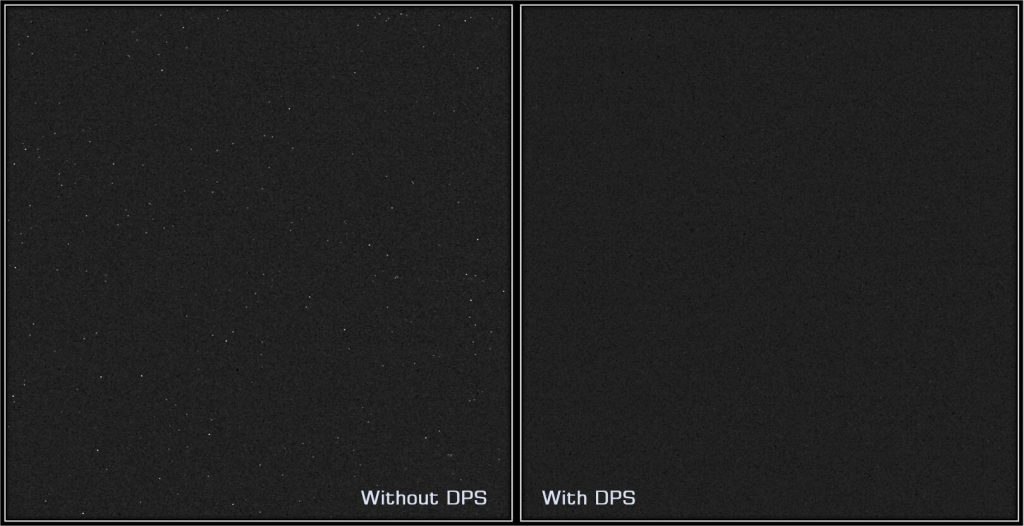
The guidance chambers of the Player One Astronomy integrate technology DPS (Dead Pixel Suppression), an internal system of suppression of defective pixels based on statistical analysis.
The operation is as follows:
-
The camera analyzes multiple dark frames to identify fixed anomalous pixels (hot pixels or dead pixels).
-
It generates a internal map which is stored in the camera's memory.
-
During the capture, these defective pixels are dynamically replaced by a median value calculated from the surrounding active pixels.
The result is an image cleaner and more homogeneous, especially beneficial in:
-
Guided with short exposures
-
Non-refrigerated chambers
-
Quick captures where full calibrations are not always applied
Electrical protection and safety
The cameras Player One Astronomy incorporate overvoltage and overcurrent protection mechanisms, designed for protect both the camera itself and the rest of the connected equipment against electrical incidents during use.
This protection system adds a layer of security especially relevant in complex astronomical configurations, where multiple USB powered and connected devices coexist.
Any claim of unprovable market leadership is eliminated and only what is technically verifiable is maintained.
Data port and capture performance
The Xena 585M uses an interface USB 3.0, the new system, which allows a high performance in data transfer. Under optimal conditions, with preview at complete resolution, the camera can reach up to 47 frames per second in RAW mode8, using a 10-bit ADC.
During the recording of images or sequences, the final performance may be limited by the storage device write speed used. If the disk is not fast enough, the actual capture rate may fall below the theoretical maximum of the camera.
For this reason, the use of a high quality SSD disk, the IMX585 sensor's transfer and capture capabilities can be fully utilized.
Guidance via ST4 port
The Xena 585M is compatible with direct guidance via ST4 port, allowing the camera to be connected to the aUTO GUIDE port of the equatorial mount using a standard ST4 cable.
This method of guidance offers a solution direct and compatible with most mounts, especially useful in configurations where software pulse guidance is not used.

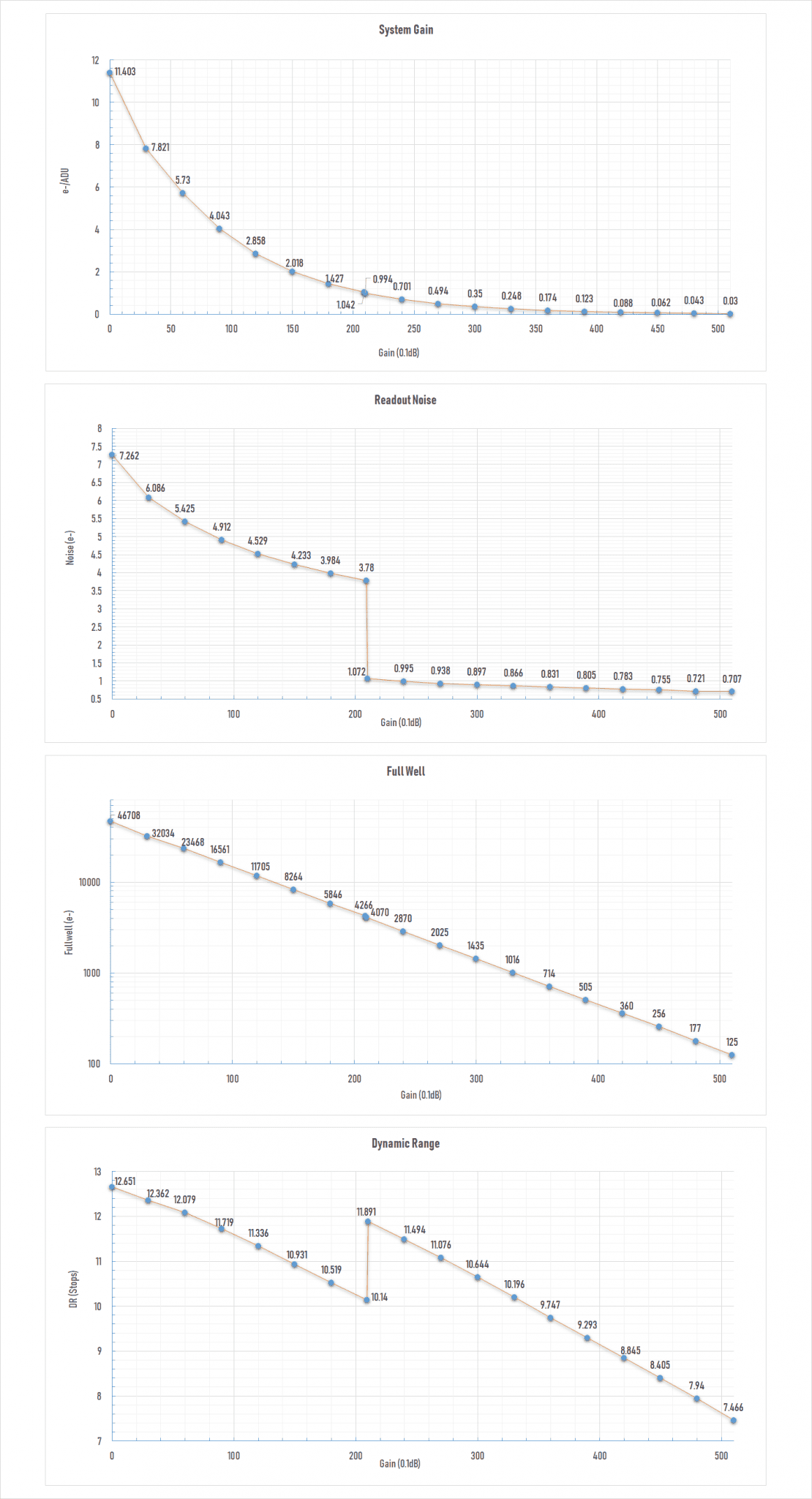
Readout Noise
Regarding the reading noise, , Player One Astronomy indicates that the published values for the Xena 585M are obtained from actual measurements, the tests are carried out by controlled and repeatable tests.
The manufacturer recommends that users carry out their own tests using SharpCap 4, which incorporates the Sensor Analysis, a standardized and widely accepted method in astrophotography for the measurement of readout noise on CMOS sensors.
After multiple tests, the Xena 585M can achieve a minimum read noise of approximately 0.7 electrons (0.7 e-) to a gain of 500, a particularly low figure that favors the detection of weak signal in short exposures, both at high precision guidance as well as in fast capture applications.
Important technical note: Read noise varies depending on gain, operating mode and test environment. The indicated value corresponds to specific conditions and should not be interpreted as constant in all scenarios.
Quantum Efficiency (QE)
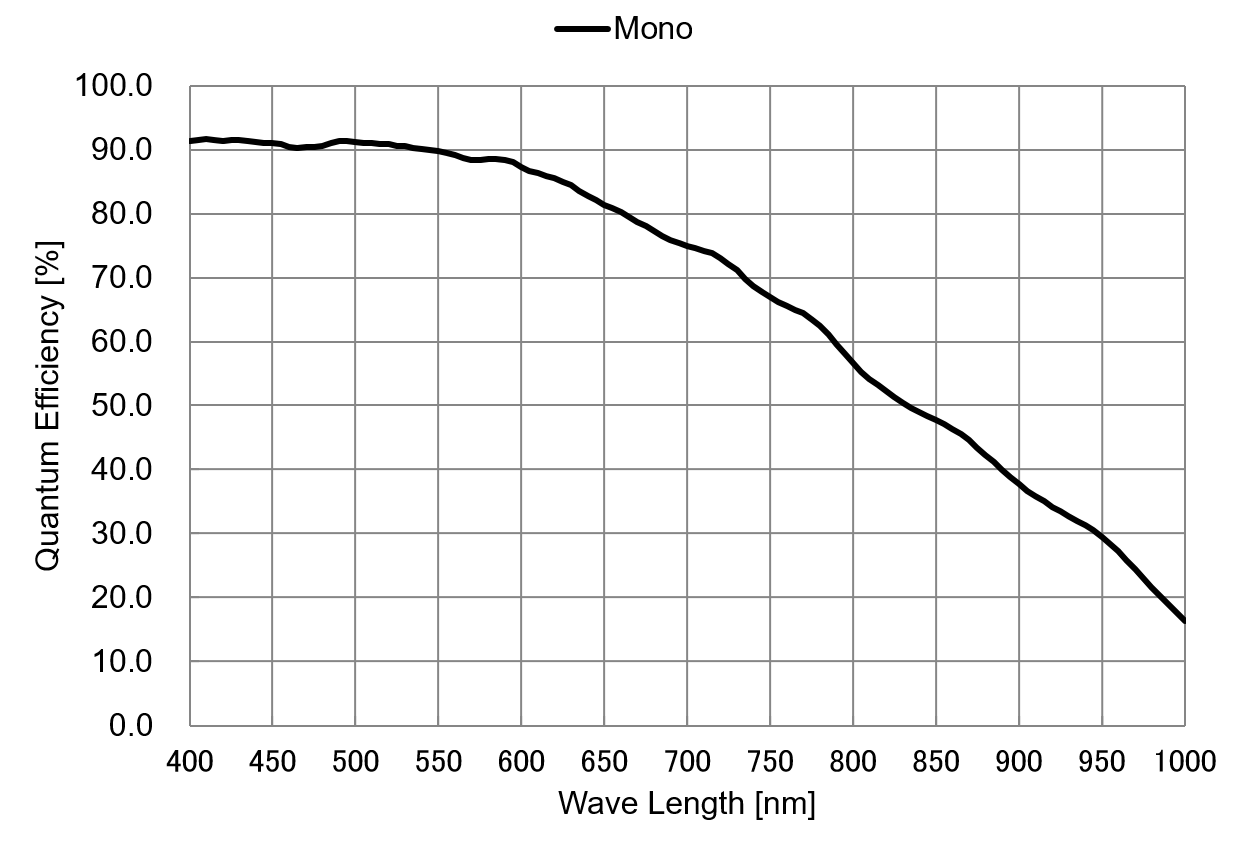
The Player One Astronomy Xena 585M presents a maximum quantum efficiency (QE peak) of approximately 91 %, which indicates a high photon-to-electrical signal conversion capability in its optimum sensitivity range.
High QE is a key factor for: